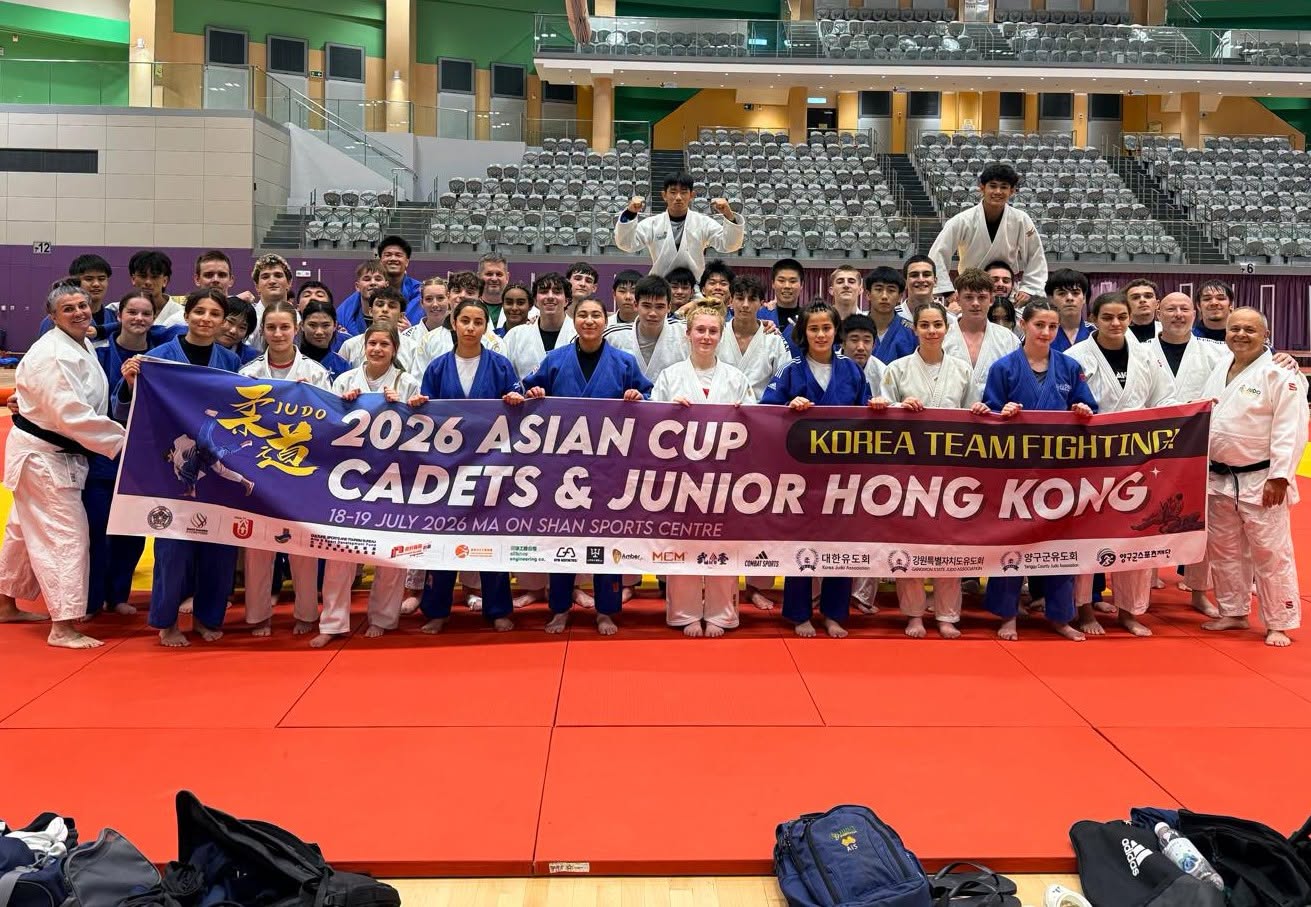
Western Australia’s emerging judoka made an impressive start to their Asian tour, collecting six medals across the Hong Kong Asian Cadet Cup and Hong Kong Junior Asian Cup on 18 and 19 July 2026.
Nine WA athletes represented Australia in Hong Kong, testing themselves against international competitors from across Asia, Oceania, Europe and the Americas.
The WA contingent finished the weekend with two silver and four bronze medals, led by Mia Siboni, who reached the podium in both the cadet and junior competitions.
WA results
| Athlete | Division | Cadet result | Junior result |
|---|---|---|---|
| Kayla Nae | Women +70kg | Silver | — |
| Mia Siboni | Women −52kg | Silver | Bronze |
| Zechariah Navea | Men −55kg/−60kg | Bronze | Unplaced |
| Lena Wolak | Women −48kg | 5th | Bronze |
| Chloe Tournier | Women -57kg | 5th | — |
| Oren Kelly | Women −57kg | — | Bronze |
| Isaac Chinchilla | Men −66kg | Unplaced | 7th |
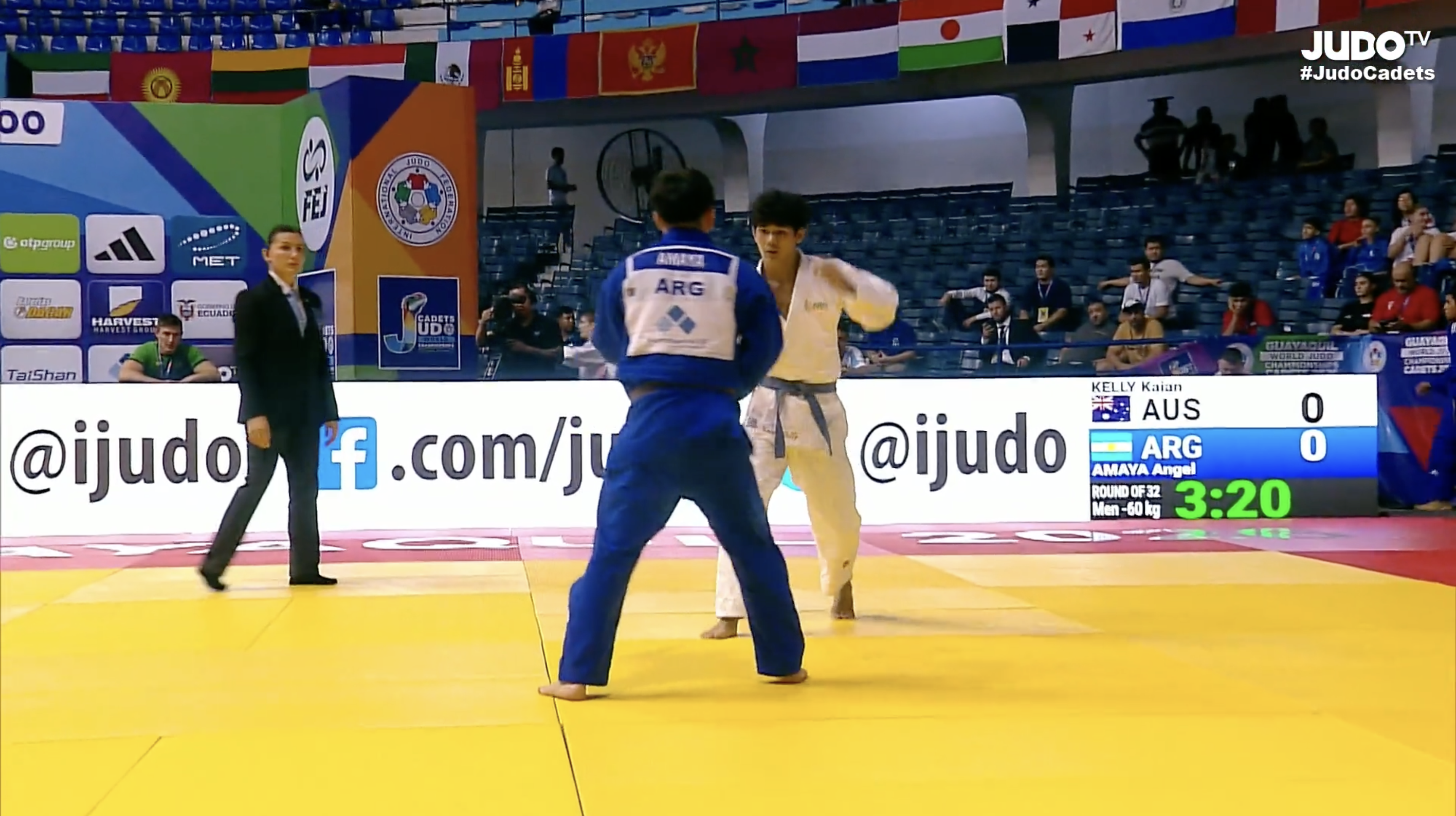
| Kaian Kelly | Men −60kg | 5th | Unplaced |
| Noa Hogarth | Men −66kg | — | Unplaced |
The Hong Kong Asian Cadet Cup attracted 120 athletes from 13 countries, while 140 athletes representing 15 countries contested the following day’s Junior Asian Cup.
Day 1: Hong Kong Asian Cadet Cup
Kayla Nae wins +70kg silver
Kayla Nae secured Western Australia’s first medal of the weekend in the Cadet Women’s +70kg round-robin competition.
Nae opened her campaign against Russia’s Anna Zheleva, who scored ippon after nine seconds.
The Australian responded strongly in her second contest, defeating Korea’s Kim Seohee inside two minutes to secure second place and the silver medal.
Mia Siboni takes −52kg silver
Mia Siboni produced one of WA’s strongest performances of the event, progressing through the Cadet Women’s −52kg draw to reach the final.
After receiving an opening-round bye, Siboni faced Malaysia’s Qaleeda Izz Dika Mohd Rosidi in the quarterfinal. Siboni controlled the contest and prevailed by waza-ari at the end of the four-minute regulation period.
She then met Vietnam’s Ta Yen Nhu in the semifinal. Siboni again went the distance, scoring a waza-ari and yuko while conceding only a yuko to earn her place in the gold-medal contest.
Mongolia’s Sayajargal Lkhagvadorj awaited in the final. The Mongolian brought Siboni’s run to an end with ippon after 2:05, leaving the WA judoka with a well-earned silver medal.
Zechariah Navea earns −55kg bronze
Competing in the Cadet Men’s −55kg division, Zechariah Navea received an opening-round bye before facing Malaysia’s Najwan Aqra Rasdan.
Navea won the quarterfinal by ippon after 3:36, advancing to face Russia’s Ruslan Shikhakhmedov.
Shikhakhmedov scored ippon at 3:16, sending Navea into the bronze-medal contest against Macau’s Iek Ian Chong.
Navea responded emphatically, scoring ippon after 2:39 to claim the bronze medal.
Kaian Kelly places fifth at −60kg
Kaian Kelly began his Cadet Men’s −60kg campaign with an opening-round bye before defeating Macau’s Hou Hei Tong by ippon in only 20 seconds.
He then faced Russia’s Artem Stepanov in the quarterfinal. Kelly prevailed after 3:17 in a high-scoring contest to earn his place in the semifinal against Australian teammate Lochlan Cook.
The semifinal continued deep into golden score, with Cook eventually scoring the deciding yuko after 7:45 of total contest time.
Kelly met Russia’s Egor Bokhonov for the bronze medal but was defeated by ippon after 2:07, completing the competition in fifth place.
Lena Wolak finishes fifth at −48kg
Lena Wolak met Saudi Arabia’s Raghad Alghamdi in her opening Cadet Women’s −48kg contest.
The closely fought match extended into golden score, with Alghamdi’s waza-ari separating the pair after 4:08.
Wolak remained in medal contention through the repechage and later faced fellow Australian Abbey Cook for a place in the bronze-medal contest. Cook scored ippon after 2:02, leaving Wolak in fifth place.
Isaac Chinchilla competes at −66kg
Isaac Chinchilla faced Saudi Arabia’s Firas Jabbari in his opening Cadet Men’s −66kg contest.
Chinchilla remained in the match for the full four minutes, but Jabbari accumulated the decisive scores to advance.
With Jabbari subsequently eliminated before reaching the semifinal, Chinchilla did not enter the repechage and finished unplaced.
Chloe Tournier places fifth at −57kg
Chloe Tournier competed in the six-athlete Cadet Women’s −57kg division.
Tournier began against Mongolia’s Anujin Erdenetungalag. The Mongolian scored two waza-ari to win by ippon after 1:51 and went on to claim a bronze medal.
Tournier remained in medal contention and faced another Mongolian opponent, Giiguulen Ganzorig, in the bronze-medal contest.
Ganzorig secured the victory by ippon after 12 seconds, leaving Tournier in fifth place.
Day 2: Hong Kong Junior Asian Cup
Lena Wolak claims −48kg bronze
Returning the following day in the older Junior Women’s −48kg division, Wolak met Mongolia’s Amin-Erdene Tsogbadrakh in her opening contest.
The Mongolian won by ippon after 1:39, but Wolak remained in medal contention through the repechage.
Her scheduled bronze-medal opponent, Hong Kong’s Isabel Sharan Loo E Khan, did not contest the match. Wolak received the official victory and the bronze medal, improving on her fifth-place cadet result from the previous day.
Mia Siboni adds junior bronze
Siboni returned to the mat in the Junior Women’s −52kg competition following her cadet silver.
After receiving an opening-round bye, she defeated Russia’s Angelina Eremenko by two waza-ari in just 40 seconds.
That victory placed Siboni in the semifinal against Korea’s Haneul Yu, who won by ippon after 28 seconds.
Siboni then faced Malaysia’s Qaleeda Izz Dika Mohd Rosidi in the bronze-medal contest. With neither athlete able to score during regulation time, the match entered golden score.
Siboni eventually found the deciding yuko after 6:23 of total contest time, securing her second medal of the weekend.
Oren Kelly wins −57kg bronze
Oren Kelly opened her Junior Women’s −57kg campaign against Mongolia’s Giiguulen Ganzorig and made an immediate impact, winning by ippon after 46 seconds.
Kelly progressed to the semifinal against another Mongolian opponent, Anujin Erdenetungalag. Erdenetungalag scored ippon after 1:35, moving Kelly into the bronze-medal contest.
Facing Russia’s Kira Bizina, Kelly produced a disciplined four-minute performance and scored the contest’s only yuko to take the bronze medal.
Isaac Chinchilla places seventh
Chinchilla also stepped into the junior ranks, competing in the 21-athlete Junior Men’s −66kg category.
Following an opening-round bye, he met Mongolia’s Bilguungarid Enkh-Aldar. The match progressed deep into golden score before Chinchilla scored the decisive waza-ari after 7:11.
Russia’s Viktor Brezgin defeated Chinchilla by ippon in the quarterfinal, but Brezgin’s progression to the semifinal brought the WA athlete into the repechage.
Chinchilla then faced Korea’s Seunggi Kim. Kim won by ippon after 1:42, with Chinchilla completing the competition in seventh place.
Kaian Kelly contests Junior Men’s −60kg
Kelly received an opening-round bye before being drawn against Uzbekistan’s Azizbek Raupov.
The official contest sheet records a victory to Raupov at 0:00, indicating that the contest was decided without taking place.
Raupov went on to win the silver medal, while Kelly finished unplaced.
Zechariah Navea steps up to −60kg
Navea moved from Cadet Men’s −55kg into the heavier Junior Men’s −60kg division for the second day of competition.
After receiving an opening-round bye, he faced Korea’s Giung Lee, who won by ippon after 1:07.
Navea finished unplaced when Lee was defeated in the following round.
Noa Hogarth competes at −66kg
Noa Hogarth also entered the strong Junior Men’s −66kg category.
After receiving a bye, Hogarth faced eventual bronze medallist Viktor Brezgin of Russia.
Hogarth scored a waza-ari and accumulated two penalties, but Brezgin recorded the winning second waza-ari after 3:10.
Because Brezgin subsequently lost in the quarterfinal, Hogarth was not drawn into the repechage and finished unplaced.
Next stop: Macau
Six medals across two days provided an excellent beginning to the WA team’s international campaign.
Siboni led the medal count with silver in the cadet competition and bronze in the juniors, while Nae, Navea, Wolak and Oren Kelly also reached the podium.
The team will now travel to Macau for the second stage of its Asian tour. Before returning to competition, the athletes will participate in a three-day international training camp, providing another valuable opportunity to train with judoka from across the region.
Following the camp, the WA athletes will again represent Australia at the Macau Cadet and Junior Asian Cups on 25 and 26 July.
The Hong Kong results have given the team a strong platform from which to continue the tour, with the training camp and Macau competition offering further opportunities for development and international experience.