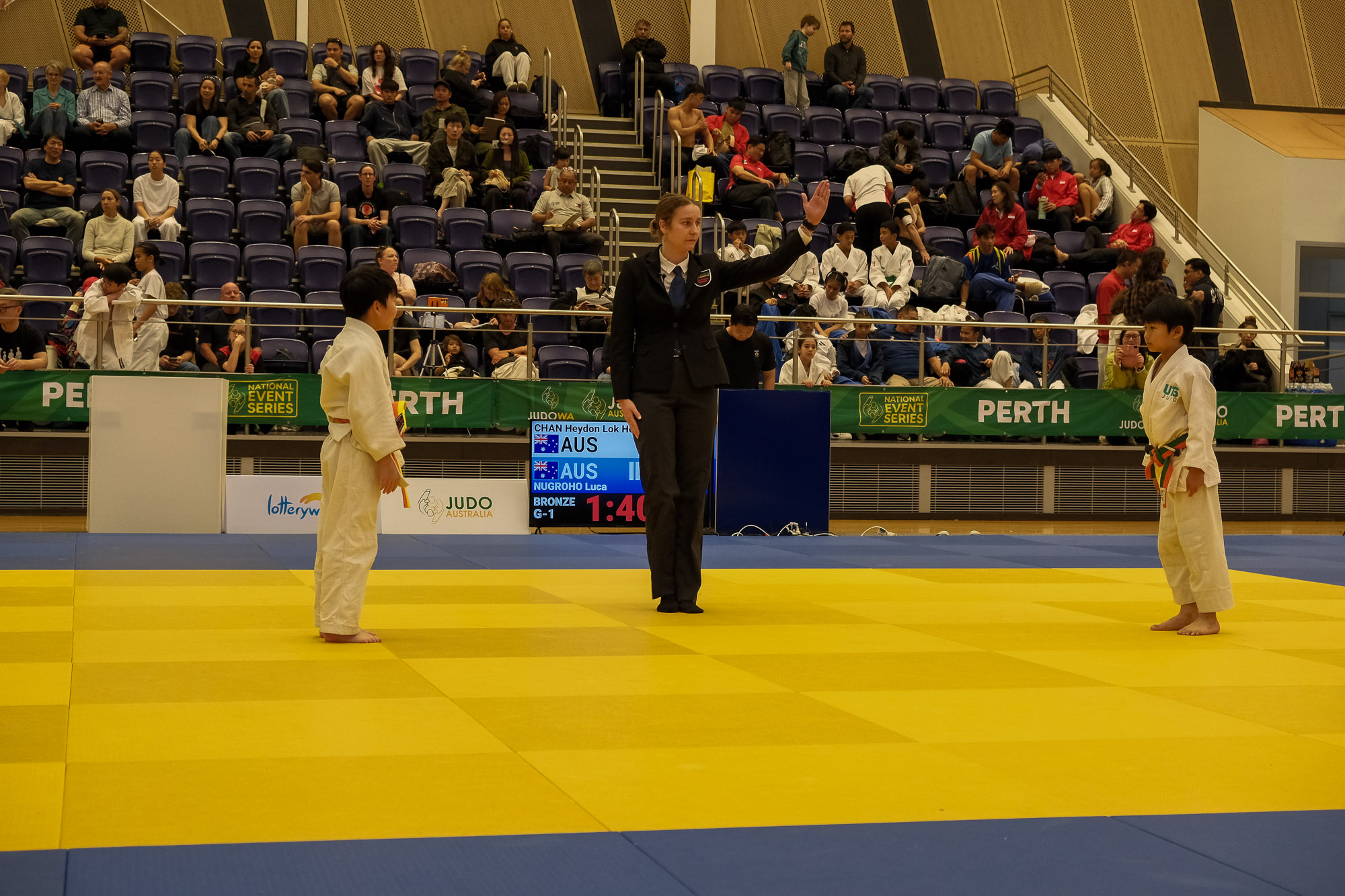
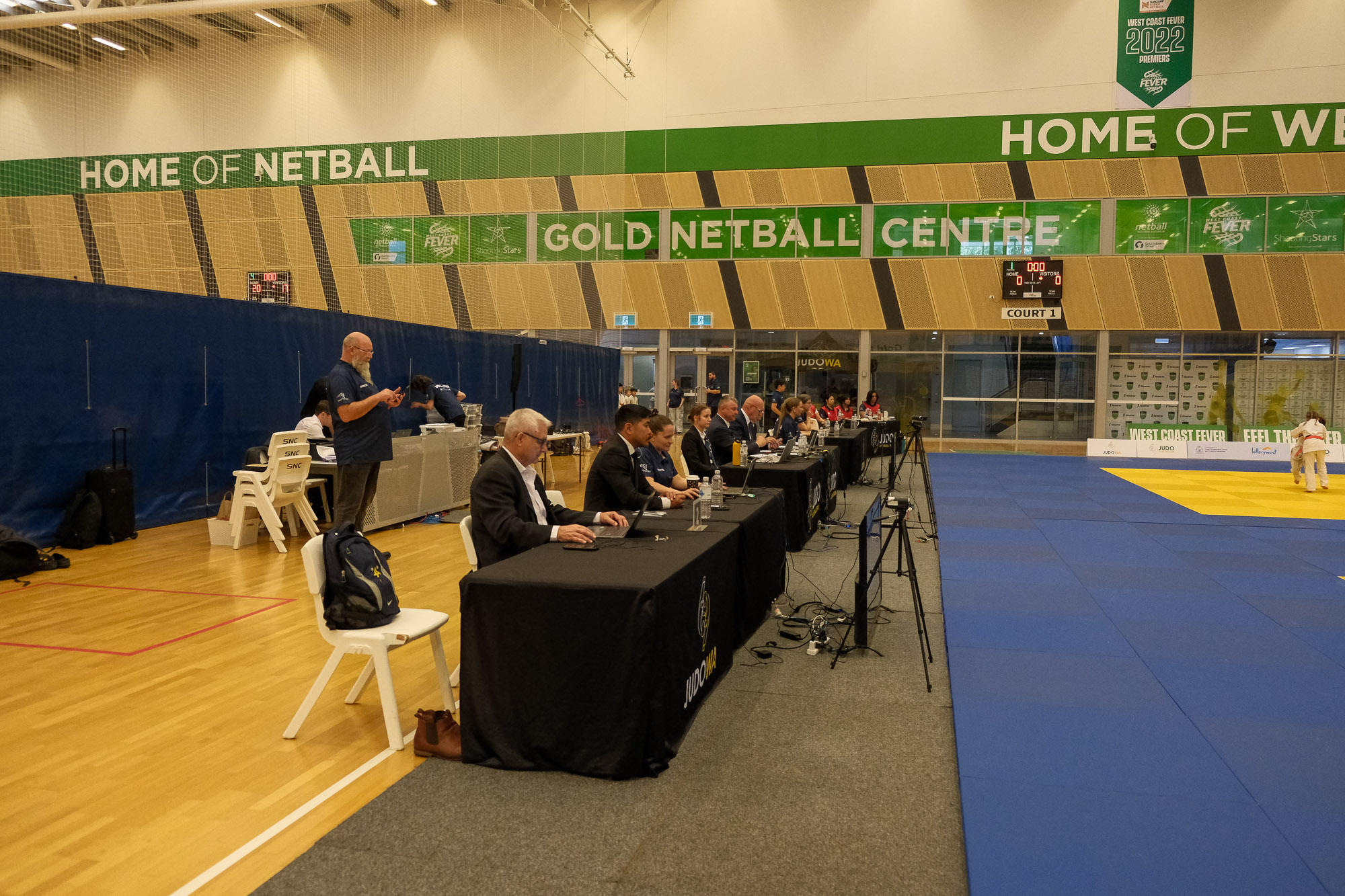
The 2026 Perth International Open brought 161 judoka together across 220 competition entries at the Gold Netball Centre on Saturday, 12 September, delivering a full day of judo from the youngest age groups through to senior, veteran, kyu grade and adaptive competition.
As part of Judo Australia’s National Event Series, the tournament combined valuable national ranking competition with something equally important for Western Australian judo: the opportunity to welcome visiting teams from the Philippines, Singapore and Vietnam to Perth. Their presence lifted the standard and atmosphere of the event, created new contests for local athletes and strengthened the relationships that continue to connect judo communities across our region.
For a state separated by considerable distance from many of Australia’s major competition centres, meaningful national and international engagement is especially valuable. Bringing visiting athletes to Perth allows more Western Australian judoka to experience unfamiliar opponents and a higher level of competition without every development opportunity requiring interstate or overseas travel. It also gives the wider WA judo community the chance to participate in an international event on home soil.
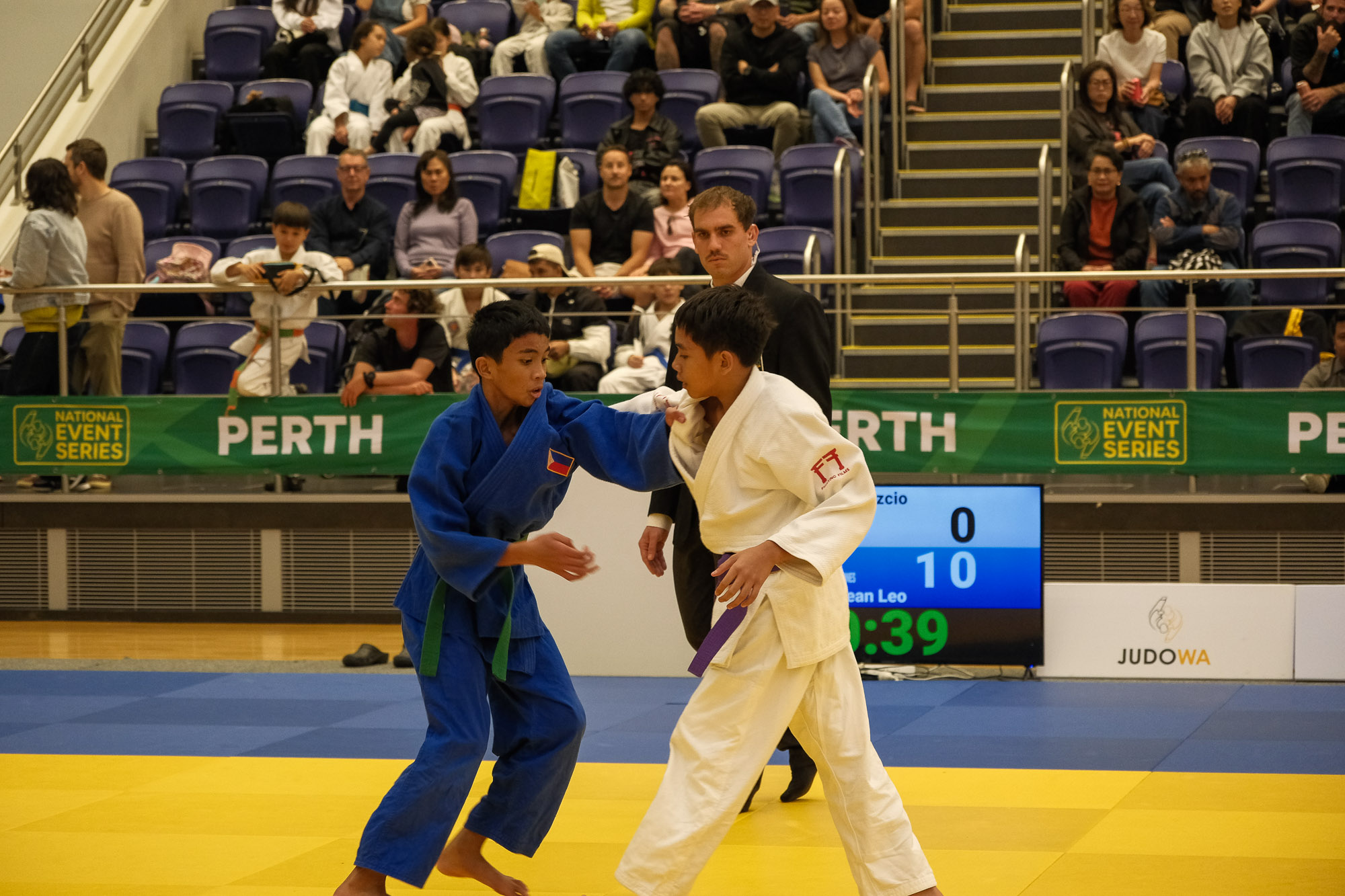
A new format for the Perth International Open
The 2026 Perth International Open introduced several important changes designed to strengthen the event and create more value for athletes travelling to Western Australia. The shiai competition moved from its traditional Sunday position to Saturday, creating space for a post-event training camp on Sunday.
The new format allowed athletes to focus fully on competition on Saturday, then return to the mat on Sunday to train with judoka they may rarely encounter at home. For interstate and international visitors, the camp made the journey to Perth a broader development experience rather than a single day of competition.
The Sunday camp was hosted by UWA Judo Club and provided three sessions, with separate training opportunities for older and younger judoka. Participation was free for Perth International Open competitors, while other eligible judoka could attend for a fee. The sessions gave local athletes valuable randori with the visiting Philippines, Singapore and Vietnam teams and provided an informal setting in which relationships formed during the tournament could continue to grow.
The move to JudoManager
The event also marked Judo WA’s move from Smoothcomp to the JudoManager competition platform. The change formed part of Judo Australia’s national digitisation project and aligned the Perth International Open with the systems being introduced across the National Event Series.
For Judo WA, this was the first time JudoManager had been used to deliver a state event in a live competition environment. The platform supported registration, draws, contest orders, athlete records and the publication of results, while the venue operation used a dedicated competition network, central event server, scoreboard computers and a separate warm-up display.
A transition of this scale inevitably brought implementation challenges, particularly as athletes, clubs and officials adapted to new registration and event-day processes. Judo WA thanks the community for its patience throughout the change. The experience provided valuable lessons that will help improve future events and represents an important step toward a more consistent national competition system.
A genuinely international field
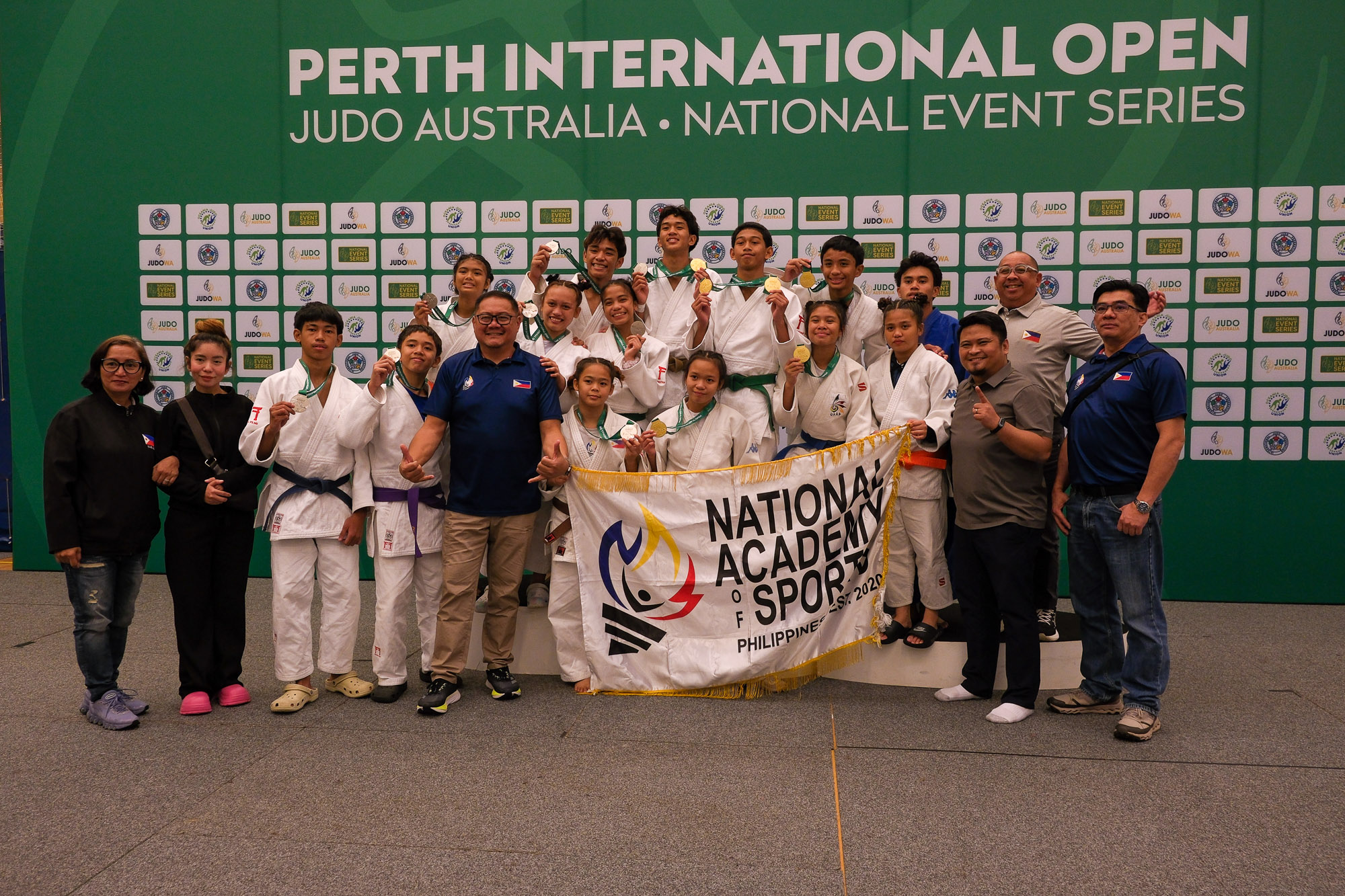
The three visiting delegations contributed 30 athletes to the competition field. JudoManager recorded 16 judoka representing the Philippines, 10 from Singapore and four from Vietnam, with their athletes competing across junior and senior divisions as well as cadet, U15 and U11 categories.
Why global engagement matters
The value of international participation extends well beyond the final medal table. Every visiting athlete brings different competitive experiences, gripping patterns, movement, tactics and approaches to contest management. Facing that variety helps Western Australian judoka become more adaptable and gives athletes and coaches a clearer benchmark of where they sit beyond their familiar local competition environment.
This exposure is particularly important for developing athletes. Younger judoka were able to share a competition venue with international teams, watch overseas athletes prepare and compete, and then train alongside them at the Sunday camp. Experiences of that kind can make international judo feel more accessible and give emerging athletes a stronger sense of what they can work toward.
Coaches, referees and technical officials also benefit. Coaches can observe different technical and tactical approaches and build relationships with their counterparts overseas. Referees gain experience managing contests involving athletes with different styles and expectations, while event officials and volunteers build the capability required to welcome and service larger delegations in future years.
Just as importantly, global engagement creates relationships that cannot be measured only in entries or medals. Time spent together at the competition, during transport and accommodation movements, and on the mat at the training camp gives athletes and officials opportunities to develop friendships and professional connections. Those relationships can lead to return visits, reciprocal training opportunities and stronger links between Western Australia and the wider Asia-Pacific judo community.
The Philippines finished second on the medal table with seven gold, nine silver and one bronze medal. Its seven titles were won by Chino Sy in Senior Men -100 kg; John Christen Labrador in Cadet Men -50 kg and U15 Boys U50 kg; Isaiah Xavier Zane Miguel in Cadet Men -55 kg; Zyrene Joy Arena in Cadet Women -48 kg; Sean Leo Leonador in U15 Boys U45 kg; and Keannah Princess Carmona in U15 Girls U44 kg. Labrador’s two titles made him one of the standout multiple-division champions of the tournament.
Singapore collected two gold, three silver and three bronze medals. Melvin Loo delivered a major senior result by winning Senior Men -73 kg, while Rongjia Rogers Sun claimed the Cadet Men -81 kg title. Singaporean athletes also featured prominently in the senior, junior and cadet placings, adding considerable depth to several of the day’s strongest divisions.
Vietnam completed an outstanding one-gold, one-silver and one-bronze return. Xuan Hai Sohan Nguyen won U11 Boys Group 2 ahead of teammate Luca Baltardive, while Jannik Gia Huy Plass earned bronze in U15 Boys U45 kg. The result was an excellent contribution from a compact four-athlete team and reflected the strong spirit in which the Vietnamese delegation approached the entire visit.
The broader field also included Brazilian participation and athletes from across Australia. The published event table recognises Brazil and Tasmania even though their competitors did not reach the medal placings. JudoManager also records a Mongolian athlete nationality; that athlete competed under a Western Australian affiliation and is therefore included in WA’s competition results.
Growing these connections is central to the long-term potential of the Perth International Open. A strong recurring international field can improve the competitive value of the National Event Series event, encourage more Australian athletes to travel west and position Perth as an accessible judo destination for teams from across the Asia-Pacific region. The benefits flow through the entire local pathway, from young club athletes experiencing their first international event to senior competitors seeking meaningful ranking contests.
Western Australian athletes lead a strong medal table
Western Australia finished at the top of the standings with 51 gold, 23 silver and 15 bronze medals. Queensland and the Northern Territory each secured a gold medal, while Victoria and New South Wales added bronze medals. The spread of interstate and international results ensured that Western Australian athletes were tested by unfamiliar opponents throughout the day.
Among the most impressive individual performances were Zechariah Navea and Mia Siboni, who each won three divisions. Navea swept the Cadet Men -60 kg, Junior Men -60 kg and Senior Men -60 kg titles, while Siboni matched that achievement across Cadet Women -52 kg, Junior Women -52 kg and Senior Women -52 kg.
A further group of athletes finished as double champions: Kaian Kelly, Oren Kelly, Roman Aizikov, Kayla Nae, Mihini Dassanayake, Bat-Erdene Munkh-Erdene and the Philippines’ John Christen Labrador. These performances reflected both the breadth of the program and the willingness of athletes to test themselves across eligible age and competition categories.
Senior division champions
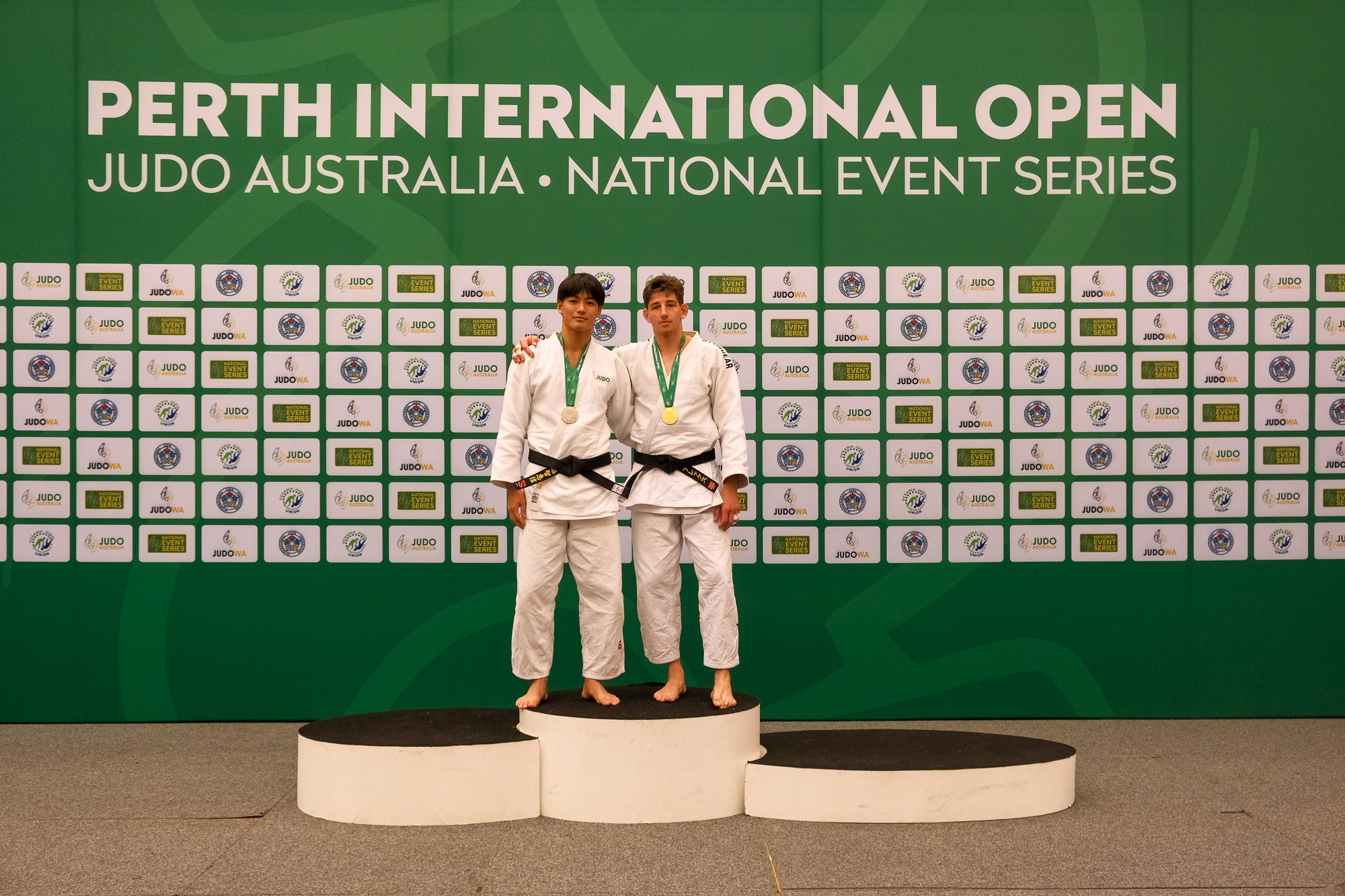
The Senior Men’s champions were Zechariah Navea at -60 kg, Kaian Kelly at -66 kg, Singapore’s Melvin Loo at -73 kg, Alexander Vasilyev at -81 kg, Angus Baird at -90 kg, the Philippines’ Chino Sy at -100 kg and Bat-Erdene Munkh-Erdene at +100 kg.
In the contested Senior Women’s divisions, Mia Siboni won -52 kg, Oren Kelly won -57 kg, Mihini Dassanayake won -70 kg and Kayla Nae won +78 kg. Across both senior categories, visiting athletes reached the podium in several divisions and claimed two of the men’s titles.
Final medal table
| Rank | State or nation | Gold | Silver | Bronze |
|---|---|---|---|---|
| 1 | Western Australia | 51 | 23 | 15 |
| 2 | Philippines | 7 | 9 | 1 |
| 3 | Singapore | 2 | 3 | 3 |
| 4 | Queensland | 1 | 1 | 1 |
| 4 | Vietnam | 1 | 1 | 1 |
| 6 | Northern Territory | 1 | 1 | 0 |
| 7 | Victoria | 0 | 0 | 1 |
| 7 | New South Wales | 0 | 0 | 1 |
| 9 | Brazil | 0 | 0 | 0 |
| 9 | Tasmania | 0 | 0 | 0 |
An event powered by its people
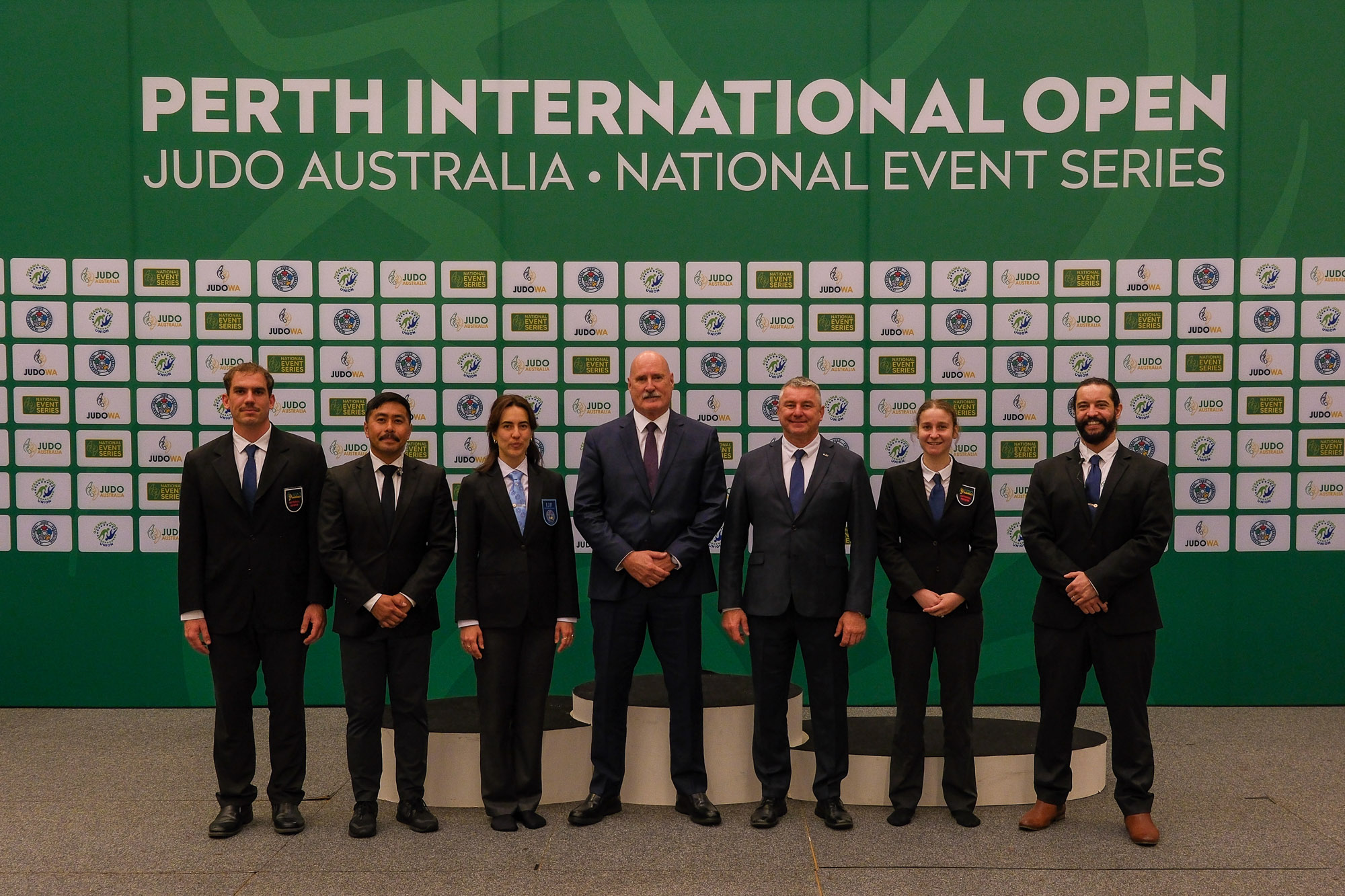
An event of this scale is only possible because people across the judo community give their time, expertise and energy. Judo WA extends its sincere thanks to the tournament officials and the referee team for delivering a demanding program with professionalism, consistency and care. We also acknowledge the work of the referee leadership and CARE personnel who supported decision-making throughout the day.
Our volunteer workforce was extraordinary. Volunteers worked across venue setup and pack-down, Friday weigh-ins, athlete check-in, draw and competition administration, mat operations, scorekeeping, marshalling, medal presentations, first aid and athlete services, commentary, livestreaming, photography, media and countless other jobs behind the scenes. Many began well before the first contest and remained after the final medal had been presented. Their effort created the event experienced by every athlete, coach, official and spectator.
Particular thanks must go to everyone who supported the logistics and hospitality arrangements for our international guests. Welcoming three visiting teams required extensive coordination well beyond the competition venue. Volunteers and event personnel helped monitor flight schedules, coordinate airport arrivals and departures, organise accommodation movements, manage vehicles and group transport, and ensure teams could travel between their accommodation, training activities, weigh-in locations, the Gold Netball Centre and the Sunday camp at UWA Judo Club.
This work often took place early in the morning, late at night and away from public view. Drivers, transport coordinators, accommodation contacts and team liaisons responded to changing schedules, different group sizes and the practical needs that come with moving athletes, coaches, officials and their luggage around Perth. Their reliability and hospitality allowed the visiting delegations to focus on competing and training, and played an important part in the impression of Western Australian judo they took home.
We sincerely thank every person who welcomed a team at the airport, drove a vehicle, coordinated a bus or itinerary, checked that a delegation had arrived safely, or helped solve an unexpected transport or accommodation issue. Their contribution was fundamental to making genuine international participation possible.
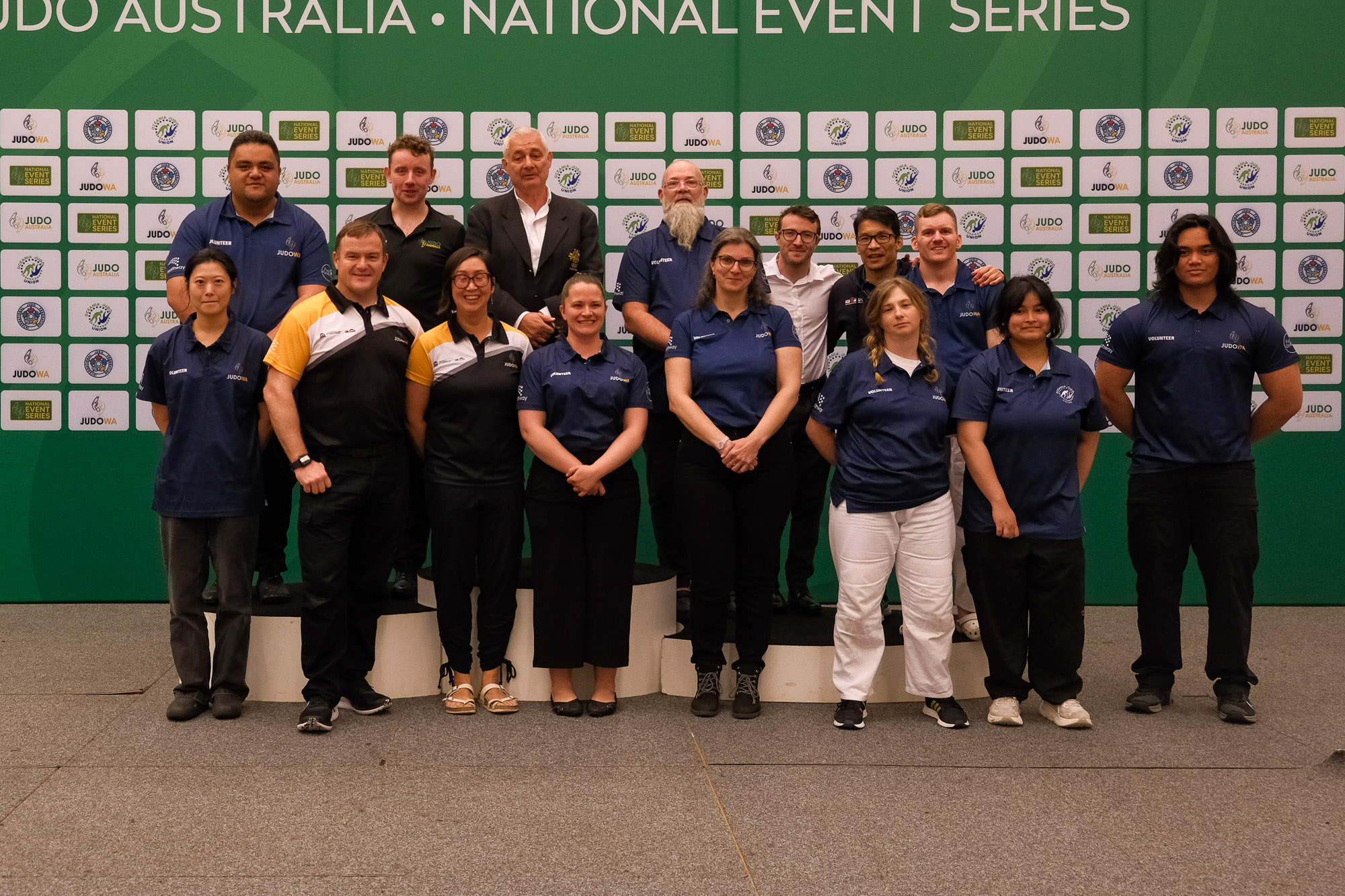
We particularly thank the Western Australian clubs that supported the event, including those that hosted weigh-in centres and released volunteers and officials to assist. We also thank the coaches, team managers, parents and supporters who helped athletes arrive prepared and contributed to a positive competition environment.
Judo WA is grateful to Judo Australia for its support through the National Event Series, to the Gold Netball Centre and venue team, and to the Government of Western Australia, Lotterywest and Healthway for their support of judo and community sport. We also thank the visiting teams and their federations, clubs and leaders for choosing to travel to Perth. We hope every delegation returned home with strong memories, new friendships and a desire to compete in Western Australia again.
Building momentum for Perth
The 2026 Perth International Open demonstrated what is possible when Western Australian judo combines a strong local base with national and international participation. The quality of competition, the size of the field and the contribution of the visiting delegations provide an important platform from which the event can continue to grow.
The ambition is not simply to increase entry numbers. It is to build an event that connects Western Australian athletes with the wider judo world, creates worthwhile reasons for teams to travel to Perth and provides enduring benefits for competitors, coaches, referees, officials and clubs. The international relationships strengthened in 2026 give Judo WA a foundation on which to pursue that ambition.
Most importantly, the tournament gave athletes at every stage of their development the chance to compete, learn and connect. Judo WA congratulates every competitor and medallist and thanks every person who helped make the 2026 Perth International Open a success.
Full draws and results are available through the JudoManager event portal.
Photos from the event are available on our SmugMug account.
The livestreams are also available on our YouTube Channel.